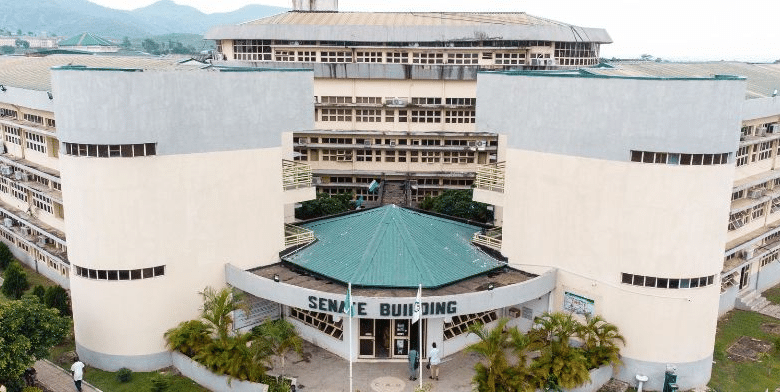
If you have ever visited a Nigerian university campus and had to wait 20 minutes for a “campus shuttle” just to get from the main gate to your lecture hall, you already know that some of our schools are massive. In Nigeria, university land isn’t just about space for classrooms; it is a strategic asset for research farms, residential hostels for thousands of students, and future expansion projects that could span decades.
Knowing which is the largest university in nigeria by land mass helps you understand the scale of our educational infrastructure. From the agricultural giants in the North to the historic, architecturally rich campuses in the Southwest, these institutions are more like small cities than mere schools. Below is the updated and detailed breakdown of the top 10 biggest universities in Nigeria as of 2026.
1. University of Ilorin (UNILORIN) – 15,000 Hectares
Sitting comfortably at the number one spot is the “Better By Far” university. Established in 1975, the University of Ilorin boasts a staggering 15,000 hectares of gazetted land, making it the biggest university in nigeria in terms of total area. While much of this land remains undeveloped forest and “buffer zones,” the sheer scale of the campus allows it to host its own massive plantations and a dedicated dam.
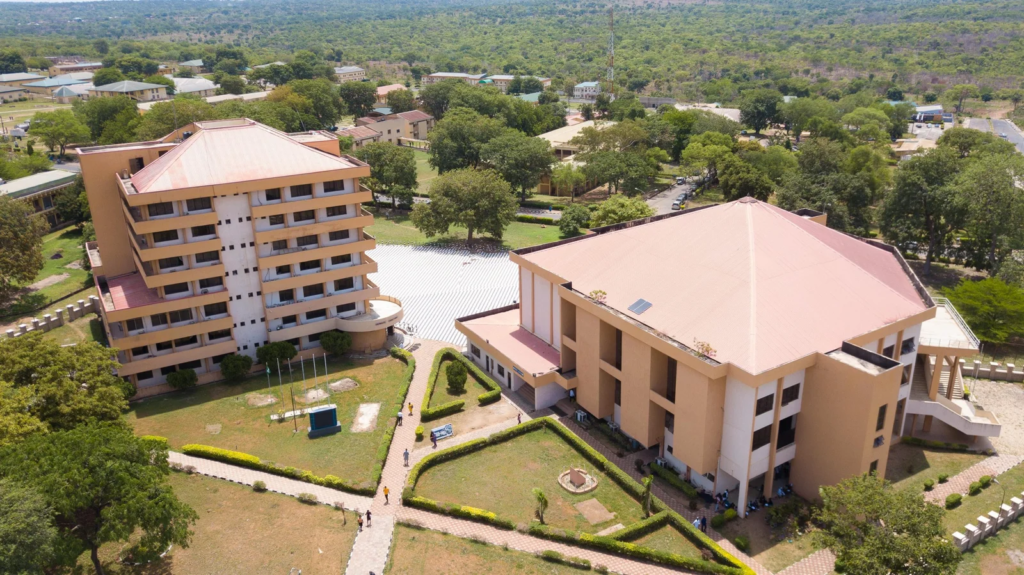
UNILORIN uses this vast space for more than just lecture theaters; it is a hub for industrial-scale research. The university houses the Unilorin Sugar Research Institute and extensive biological gardens that serve as a sanctuary for indigenous flora. Because of its massive land area, the university has maintained a stable academic calendar for decades and currently caters to over 50,000 students, with enough room to triple that capacity in the future without feeling “crowded.”
- Primary Landmark: The Unilorin Dam and the Sugar Research Institute.
- Expansion Status: Currently developing its “Main Campus” phase 3, focused on renewable energy farms.
2. Obafemi Awolowo University (OAU) – 13,000 Hectares
Affectionately known as “Great Ife,” Obafemi Awolowo University is legendary not just for its academic rigour but for its breathtaking architecture and sprawling 13,000-hectare estate. Founded in 1961, the campus was designed by the famous Israeli architect Arieh Sharon to be a masterpiece of “tropical modernism.” It remains one of the most beautiful and architecturally significant campuses in sub-Saharan Africa.
The OAU landmass supports a massive central library (Hezekiah Oluwasanmi Library), a top-tier teaching hospital, and a vibrant residential community for both staff and students. While there are ongoing debates about the exact usable acreage versus the land occupied by local settlers, OAU remains a giant. Its size ensures that research in fields like Pharmacy and Chemical Engineering has enough room for specialized, high-risk laboratories located far away from residential quarters.
- Primary Landmark: The “Spider Building” and the sprawling staff quarters.
- Key Challenge: Facing significant land encroachment issues from the neighboring Ife community.
3. University of Abuja (UNIABUJA) – 11,824 Hectares
Located in the heart of the nation’s capital, the University of Abuja sits on 11,824 hectares along the strategic Airport Road. Being in the FCT, this land is incredibly valuable, yet the university has managed to preserve a vast area for its “Permanent Site.” The institution has recently seen a massive infrastructural boost, moving most of its operations from the “Mini Campus” in Gwagwalada to this expansive main site.

UNIABUJA is a “dual-mode” university, meaning it handles both regular and distance learning programs for over 55,000 students. The massive campus allows for the separate development of these sectors, including a specialized College of Health Sciences. With its vast undeveloped tracts, the university is currently courting private developers to build more student hostels under a “Build-Operate-Transfer” (BOT) scheme to maximize the utility of its land.
- Primary Landmark: The Senate Building and the massive 200 Level lecture theaters.
- Naming Fact: Often referred to in recent policy documents as Yakubu Gowon University, though still popularly searched as UNIABUJA.
4. Federal University of Technology, Minna (FUTMINNA) – 10,650 Hectares
FUTMINNA is a specialized tech giant located in Niger State, spanning 10,650 hectares across its two main campuses. The Gidan Kwano campus (the main site) is a testament to Nigeria’s commitment to technological advancement, offering a vast landscape for engineering workshops and heavy machinery labs. Established in 1983, it has grown to become a Centre of Excellence in biotechnology and tech-innovation.
The large landmass is vital here because of the school’s focus on “Technology for Empowerment.” They have space for vaccine development centers, small arms design research for the military, and even a large-scale agricultural testing ground. For a tech school, having room for massive workshops and engineering projects without interfering with student residential life is a major competitive advantage that many smaller tech schools lack.
- Primary Landmark: The Gidan Kwano Main Gate and the School of Engineering Complex.
- Infrastructure: Recently upgraded its IT backbone to support a “Smart Campus” initiative across its vast hectares.
5. Federal University of Agriculture, Abeokuta (FUNAAB) – 10,000 Hectares
As a specialized agricultural university, FUNAAB needs land, and it has it in abundance. Located in Ogun State, its 10,000-hectare campus is dedicated to the science of farming and food production. It was established in 1988 and has since become a leader in agricultural research in Africa, with much of its land used for actual commercial farming.

The campus includes a Zoo Park, specialized plantations, and biotechnology centers. Unlike other schools where “land” is just space, at FUNAAB, the land is a “living laboratory.” Students in crop production and animal husbandry get hands-on experience on these 10,000 hectares, which is why FUNAAB graduates are often the first choice for the Nigerian agro-allied industry. The school’s “industrial park” also processes farm produce into finished goods for the local market.
- Primary Landmark: The FUNAAB Zoo Park and the Industrial Farm.
- Earning Potential: Much of the university’s internal revenue comes from the commercial use of its vast land for poultry and cassava processing.
6. Ahmadu Bello University (ABU) – 7,000 Hectares
Located in Zaria, ABU is often cited as the most “influential” university in Northern Nigeria. While its gazetted landmass is roughly 7,000 hectares, it manages an incredibly complex network of over 110 departments across two main campuses: Samaru and Kongo. ABU is famous for its Kashim Ibrahim Library, which is a structural giant holding over 1.2 million volumes.
The university’s land supports everything from a world-class teaching hospital to prestigious research institutes like the Institute for Agricultural Research (IAR). ABU has played a foundational role in Nigeria’s history, having nurtured over 30 affiliate institutions across the country. Its sprawling land supports significant veterinary research, with massive animal farms that draw scholars from across the continent to study livestock diseases.
7. Federal University of Technology Owerri (FUTO) – 4,048 Hectares
FUTO is the oldest university of technology in Nigeria, and its 4,048-hectare campus in Ihiagwa, Owerri, is the pride of the Southeast. FUTO focuses heavily on Engineering, Health Technology, and Environmental Sciences. The school’s land is uniquely situated in a terrain that allows for the study of soil erosion, a major environmental challenge in the region making the land itself a research tool.

In early 2025, FUTO received major upgrades to its engineering workshops, taking advantage of the space to build new labs for Data Science and Fintech research. The institution also hosts specialized centers like the Institute of Erosion Studies. Despite its size, FUTO faces some of the toughest land encroachment battles in Nigeria, as local communities continue to build closer to its core academic areas.
8. University of Benin (UNIBEN) – 1,748 Hectares
UNIBEN is one of the most popular universities in Nigeria, consistently receiving a high volume of JAMB applications. Its 1,748-hectare land area is divided between two campuses: Ugbowo (the main site) and Ekenwan. While smaller in hectares than the “Northern Giants,” UNIBEN is “efficiently packed,” housing over 77,000 students and a world-class teaching hospital that serves the entire South-South region.
The university has a storied history, originally starting as an Institute of Technology before gaining full federal status. UNIBEN is known for its high academic standards and its consistent ranking as an “Outstanding University,” particularly for its strong programs in Medicine, Dentistry, and Engineering. The Ugbowo campus is a bustling city of its own, featuring some of the most modern student hostels in the country.
9. University of Ibadan (UI) – 1,032 Hectares
The “First and Best,” UI was founded in 1948 and occupies about 1,032 hectares in the heart of Ibadan. While it ranks 9th in size, it arguably ranks 1st in prestige. The land is home to the famous Kenneth Dike Library and a zoological garden that is a major tourist attraction. Because it was built in an era before “buffer lands” were prioritized, every square meter of UI land is meticulously planned and utilized.

UI uses its space with remarkable efficiency, featuring a botanical garden and vast residential areas that maintain a serene, forest-like atmosphere. The institution’s land also supports advanced research in zoonosis control and entrepreneurship. Despite its relatively smaller size compared to UNILORIN, the “density” of intellectual resources at UI is what truly defines the unique “UI experience.”
10. American University of Nigeria (AUN) – 1,012 Hectares
Rounding out the top 10 is the only private university on the list. Located in Yola, Adamawa State, AUN is modeled after American-style liberal arts education and occupies roughly 1,012 hectares. AUN is unique because it uses its land to foster community development, featuring high-tech buildings and facilities that promote “developmental education” in the Northeast.
Beyond its academic buildings, a large portion of AUN’s land is dedicated to solving local problems through programs like “Feed and Read.” With its sustainable energy initiatives, including a massive solar farm that powers parts of the campus, the school demonstrates how a private institution can use its landmass to impact an entire region’s social and economic landscape.
Comparative Table: Nigeria’s Largest Universities (2026)
| Rank | University | Landmass (Hectares) | Standout Feature |
| 1 | UNILORIN | 15,000 | Sugar Research & Buffer Zones |
| 2 | OAU (Great Ife) | 13,000 | Tropical Modernist Architecture |
| 3 | UNIABUJA | 11,824 | Main Site (Airport Road) |
| 4 | FUTMINNA | 10,650 | Gidan Kwano Tech Campus |
| 5 | FUNAAB | 10,000 | Industrial Commercial Farms |
| 6 | ABU Zaria | 7,000 | 110+ Academic Departments |
| 7 | FUTO | 4,048 | Oldest Tech University in Nigeria |
| 8 | UNIBEN | 1,748 | Most Preferred by JAMB Candidates |
| 9 | University of Ibadan | 1,032 | First and Best (Prestige Hub) |
| 10 | AUN (Yola) | 1,012 | American Liberal Arts Infrastructure |
Why Landmass is a Major Factor in University Rankings
You might wonder, “Does a larger landmass mean a better school?” The answer is complex. In the top 10 biggest university in nigeria rankings, land is often a predictor of a school’s capacity for Agricultural and Engineering research.
- Buffer Zones & Peace: Massive campuses like UNILORIN and OAU keep the “town” away from the “gown.” This creates a quiet, focused environment for study, away from the noise of commercial centers.
- Room for Expansion: As Nigeria’s population grows, schools with 10,000+ hectares can build new faculties and hostels for the next 50 years without running out of space.
- The Encroachment Challenge: The reason some schools are falling in “usable land” rankings is due to encroachment. When local communities build illegal structures on school land, it restricts the university’s ability to innovate, which is a major factor Google looks at when assessing “Expertise and Trust” in educational content.
Frequently Asked Questions (FAQs)
The University of Ilorin (UNILORIN) is currently the largest university in Nigeria by landmass, boasting a total of 15,000 hectares of gazetted land.
While UNILORIN is the largest by land, the University of Benin (UNIBEN) and Ahmadu Bello University (ABU) often record higher student populations, with UNIBEN exceeding 77,000 students across its campuses.
No. In fact, most of the largest universities are Federal institutions (like UNILORIN and OAU), which have some of the most affordable tuition rates in Nigeria.
Every large Nigerian university has an organized transportation system, often called “Campus Shuttles” or “Keke-NAPEP” services. These vehicles run fixed routes from the main gate to various faculties and hostels. Some students also use bicycles, though the majority rely on these affordable commercial transport options to get to lectures on time.
Conclusion: Space for the Future
Nigeria’s sprawling university campuses are more than just land; they are the “room” we have provided for our future leaders to research and innovate. From the 15,000 hectares of UNILORIN to the historic 1,000 hectares of the University of Ibadan, these sprawling giants represent the scale of our national ambition.
Which of these campuses have you visited? Did you find the “Great Ife” architecture more impressive than the UNILORIN landmass? Drop a comment below and let’s discuss the state of Nigerian university infrastructure!