Nigerian polytechnic education has undergone significant transformation in recent years, with the National Board for Technical Education (NBTE) implementing a standardized grading system that now governs all National Diploma (ND) and Higher National Diploma (HND) programs across the country. Whether you’re a prospective student, current polytechnic attendee, or parent trying to understand your child’s academic performance, this comprehensive guide will break down everything you need to know about how grading works in Nigerian polytechnics.
The NBTE Standardization
In 2015/2016, the National Board for Technical Education made a landmark decision to unify the grading system across all Nigerian polytechnics. Before this reform, different institutions used varying scales, creating confusion for students, employers, and educational institutions assessing transfer credits or graduate school applications. The new standardized system brought consistency and clarity to technical education across Nigeria, ensuring that a grade earned at Federal Polytechnic Oko carries the same weight as one earned at Yaba College of Technology or any other accredited institution.
This unified approach uses a 4.0 scale that aligns Nigerian polytechnic education with international academic standards, making it easier for graduates to pursue further education abroad or compete in the global job market. The system reflects Nigeria’s commitment to producing technically competent graduates who can meet both local and international industry standards.
Understanding the NBTE Grading Scale
The Nigerian polytechnic grading system features nine distinct grade levels, each corresponding to specific percentage ranges and grade point values. Here’s the complete breakdown:
Grade A (75-100%) – 4.00 grade points: This is the highest achievement level, representing excellent mastery of course content and exceptional performance in both theoretical and practical components. Students earning A grades demonstrate outstanding understanding and application of technical skills.
Grade AB (70-74%) – 3.50 grade points: This grade indicates very strong performance, just below excellence. Students at this level show comprehensive understanding with minor areas for improvement.
Grade B (65-69%) – 3.25 grade points: A solid B reflects good performance and strong grasp of course material, with consistent demonstration of required competencies.
Grade BC (60-64%) – 3.00 grade points: This represents above-average performance with good understanding of core concepts and satisfactory practical skills.
Grade C (55-59%) – 2.75 grade points: An average grade showing adequate understanding and competency in the subject matter, meeting standard expectations.
Grade CD (50-54%) – 2.50 grade points: This reflects below-average but passing performance, with basic understanding of essential concepts.
Grade D (45-49%) – 2.25 grade points: A marginal pass indicating minimal acceptable performance with significant room for improvement.
Grade E (40-44%) – 2.00 grade points: The lowest passing grade, representing barely acceptable performance with fundamental understanding of basic concepts.
Grade F (Below 40%) – 0.00 grade points: This is a failing grade requiring the student to retake the course.
This detailed grading scale allows for nuanced evaluation of student performance, recognizing different levels of achievement beyond simple pass/fail distinctions.
CGPA Classifications: What Your Overall Performance Means
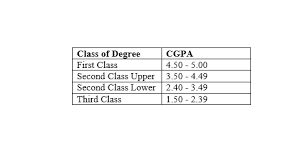
While individual course grades matter, your Cumulative Grade Point Average (CGPA) is what appears on your diploma and carries the most weight with employers and universities. The NBTE system includes four classification categories based on CGPA:
Distinction (3.50-4.00 CGPA): This is the highest honor, awarded to students who maintain exceptional performance throughout their program. Graduating with distinction significantly enhances employment prospects and often qualifies students for direct entry into university degree programs or competitive postgraduate opportunities. Many top employers in Nigeria specifically recruit distinction graduates for their management trainee programs.
Upper Credit (3.00-3.49 CGPA): This classification represents strong overall performance and is highly regarded by employers. Upper Credit graduates are competitive candidates for quality employment and further education opportunities, demonstrating consistent competency in their field of study.
Lower Credit (2.50-2.99 CGPA): While not as prestigious as the higher classifications, Lower Credit is still a respectable achievement showing satisfactory completion of program requirements. Graduates at this level can access most employment opportunities, though they may face stiffer competition for premium positions.
Pass (2.00-2.49 CGPA): This is the minimum classification for program completion. While it represents successful graduation, students in this category may find fewer opportunities available, particularly for roles requiring higher academic standards or for admission into competitive degree programs.
How to Calculate Your GPA and CGPA
Understanding the calculation process helps you track your academic progress and set realistic goals. The formula is straightforward but requires attention to detail.
For Semester GPA: Multiply each course’s grade points by its credit units (also called course units). Sum all these products, then divide by the total credit units for that semester.
Example Calculation: Imagine you took four courses in a semester:
- Course A: 3 credit units, Grade B (3.25 grade points)
- Course B: 4 credit units, Grade AB (3.50 grade points)
- Course C: 2 credit units, Grade A (4.00 grade points)
- Course D: 3 credit units, Grade C (2.75 grade points)
Your calculation would be: [(3 × 3.25) + (4 × 3.50) + (2 × 4.00) + (3 × 2.75)] / (3 + 4 + 2 + 3) = [9.75 + 14.00 + 8.00 + 8.25] / 12 = 40.00 / 12 = 3.33 GPA
For CGPA: The process is similar but encompasses all semesters. Sum the products of all course grade points multiplied by their credit units across your entire program, then divide by the total credit units completed. This cumulative average reflects your overall performance throughout the 2-3 year diploma program.
Continuous Assessment and Examination Breakdown
Nigerian polytechnics don’t rely solely on final examinations. The NBTE system mandates a balanced approach that values consistent effort throughout the semester:
Continuous Assessment (30%): This component includes assignments, quizzes, tests, laboratory practicals, project work, and class participation. The continuous assessment approach ensures students cannot rely on last-minute cramming and must engage actively with course material throughout the semester. It also better reflects the practical, skills-based nature of polytechnic education, where hands-on competency develops over time.
Final Examinations (70%): End-of-semester exams test comprehensive understanding of the entire course content, including both theoretical knowledge and practical application where relevant. These exams carry substantial weight, emphasizing the importance of thorough preparation and mastery of subject matter.
This 30/70 split creates a balanced evaluation system that rewards both ongoing effort and final mastery, giving students multiple opportunities to demonstrate their capabilities.
The Importance of Attendance in Nigerian Polytechnics
Most Nigerian polytechnics enforce strict attendance policies, typically requiring 75% minimum attendance for students to be eligible to sit for final examinations. This policy isn’t arbitrary—it reflects the practical nature of polytechnic education.
Technical and vocational programs involve substantial hands-on training in laboratories, workshops, and practical sessions. Missing these sessions means missing irreplaceable learning experiences. You cannot learn welding techniques, electrical wiring, or computer programming solely from textbooks; you must be present for practical demonstrations and supervised practice.
Beyond academic reasons, the attendance policy instills professional discipline. In the workplace, consistent attendance is non-negotiable, and polytechnics prepare students for this reality. Some institutions even incorporate attendance into continuous assessment scoring, further emphasizing its importance.
Implications for Employment and Further Education
Your CGPA classification has real-world consequences. Many Nigerian employers, particularly in competitive sectors like banking, oil and gas, telecommunications, and manufacturing, set minimum CGPA requirements often 3.00 or higher for job applications. Some companies specifically target Distinction and Upper Credit graduates for their graduate trainee programs.
For students planning to pursue Higher National Diploma (HND) after completing National Diploma (ND), most polytechnics require a minimum of Lower Credit classification for admission. Those aiming for university degree programs through direct entry may face even higher requirements, with many universities preferring Upper Credit or Distinction graduates.
Challenges and Ongoing Debates
Despite the NBTE standardization, challenges remain. Some critics argue about grade inflation, where institutions may feel pressure to award higher grades to maintain reputation or student satisfaction. Others point to variations in assessment rigor between institutions, even under the unified system.
There’s also ongoing discussion about whether the grading system adequately captures soft skills like teamwork, communication, and problem-solving competencies that employers increasingly value. Some educators advocate for more holistic assessment methods that go beyond numerical grades.
Tips for Academic Success in Nigerian Polytechnics
To maximize your performance under the NBTE grading system:
- Prioritize attendance: Don’t underestimate the 75% requirement. Missing classes means missing learning and potentially disqualification from exams.
- Take continuous assessment seriously: With 30% of your grade at stake, every assignment, quiz, and test matters. Don’t focus only on final exams.
- Understand credit weighting: Courses with higher credit units have greater impact on your GPA. Allocate study time accordingly.
- Track your progress: Calculate your GPA each semester to know where you stand and what you need to improve.
- Seek help early: If you’re struggling in a course, consult lecturers or tutors before it’s too late. Falling below 2.00 in any semester can jeopardize your standing.
- Balance theory and practice: Polytechnic education values both. Excel in exams but also demonstrate practical competency in laboratory and workshop assessments.
Frequently Asked Questions (FAQs)
GPA is your grade point average for a single semester, while CGPA is your cumulative average across all semesters of your entire diploma program.
You need a CGPA between 3.50 and 4.00 to graduate with Distinction from a Nigerian polytechnic.
No, most Nigerian polytechnics require at least 75% attendance to be eligible to sit for final examinations.
Continuous assessment accounts for 30% of your final grade and includes assignments, quizzes, tests, practicals, and class participation throughout the semester.
If you score below 40% (Grade F), you must retake the course, and it will be factored into your CGPA calculation.
Conclusion
The NBTE grading system represents a significant advancement for Nigerian polytechnic education, bringing standardization, clarity, and international alignment to technical and vocational training. Understanding how the system works from individual grade points to CGPA classifications empowers students to make informed decisions about their academic journey and career prospects.